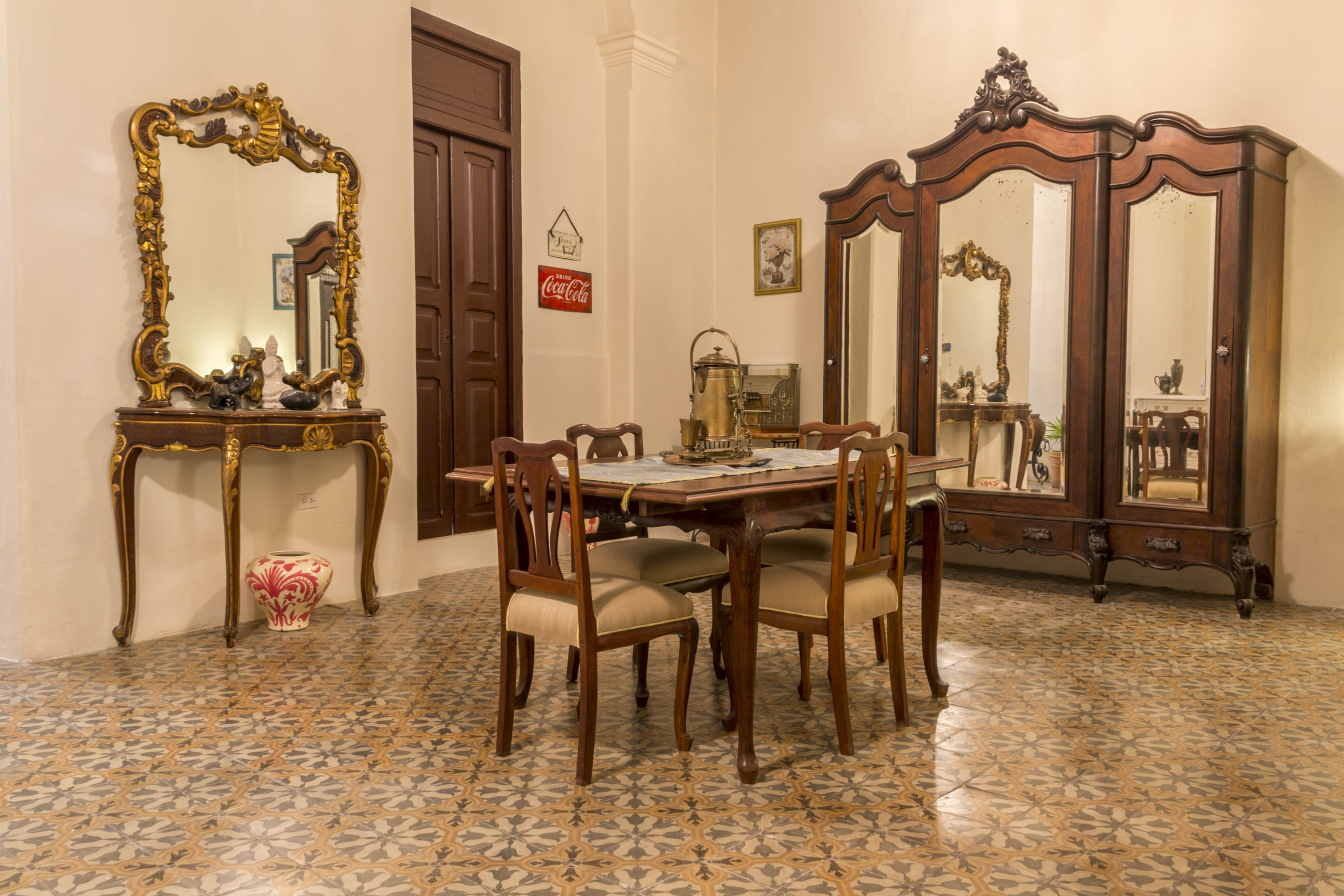
Renting out a home in Cuba now rests on Ley 187/2026, the Housing Law in force since 21 October 2026. Article 72.1 gives owners the right to rent the whole home, rooms or spaces, while protected family members keep their rights, and Article 72.3 lets a tenant sublet with the owner’s approval. Cuba Luxury Rent works from that text.
Picture the ground floor of a family house in Playa. Two rooms with their own door to the side garden, a small kitchen, a bathroom somebody tiled in the nineties. The children who lived there moved out years ago. Every owner with a space like that has asked the same question across the kitchen table: can we rent it, and on what terms? Since October the answer sits in a new law, and in places it reads differently from the one Cubans grew up with.
We’ve been in Cuba since 2000, and we’ve seen the old housing law patched more times than most of the roofs it covered. This piece is written as of November 2026, from the text of Ley 187/2026 and its two regulations, all three published in Gaceta Oficial No. 86 on 14 October 2026.
What does the 2026 law say about renting out a home?
Article 72.1 of Ley 187/2026 says owners have the right to rent the whole home, rooms or spaces. Article 72.2 says the contract between landlord and tenant sets the object, the duration, the price, the rights and duties of each side, and anything else they find necessary. The law took effect seven days after publication, on 21 October 2026.
The National Assembly passed the law on 30 July 2026. Its Fifth Final Provision repeals Ley 65 of 23 December 1988, Cuba’s general housing law ever since, and eight decree-laws that amended it. One of them is Decreto-Ley 322 of 31 July 2014. That decree gave the old rental article, Article 74, the wording most owners still quote from memory.
So if you read our guide to licensed short-term rental in Cuba, note its date. We wrote it in October from Ley 65, before the new law came into force. Its sections on the August 2026 guest-reporting rule and on Old Havana still describe texts we read; the sections that quote Ley 65 now describe a law that has been repealed. Read those with the date in mind.
Decreto 176/2026, the law’s general regulation, adds one line for rooms and spaces in tourism zones. Its Article 293 says renting them “is adjusted to the regulations in force on the matter”. Which regulations those are for a given house and a given guest is a question for a Cuban lawyer. We won’t guess at it in print.
Who keeps their rights when you’re renting out a home?
The family members Article 66.1 of Ley 187 protects. Renting can’t touch their rights. The list covers parents, grandparents, children and grandchildren; a mother or father caring for children; older people in a vulnerable situation; a former spouse granted a right of habitation; and a spouse or registered partner, if they have no other home or means.
The protection has conditions. It applies to people who don’t own another home, have no other place to live and no means to find one. A sixth clause lets the authority add any other case that would be a manifest injustice. And Article 66.2 removes the protection from anyone who uses violence against the owner.
In practice, this is the conversation to have before the first guest, not after. A grandmother who lives in the back room of a Vedado house isn’t a detail in the listing. She’s a party with rights the law names. We’ve walked away from homes where nobody in the family had had that talk yet. We’d do it again.
Does a rental contract in Cuba have to go before a notary?
Under Article 227.1 of Decreto 176/2026, owners who rent rooms, spaces or a whole home formalise the contracts that run longer than a year either by public deed before a notary or by private contract, under the common civil law. Article 227.2 sends any dispute between the two sides to the courts.
That’s a choice the regulation leaves to the parties for a long let. For anything shorter, our advice is the same as it’s always been: put it in writing anyway. Name the rooms. Name the dates. Write down who has the keys. A paragraph you can hand to a lawyer beats a handshake you have to describe to one.
Can a tenant in Cuba sublet the home?
Yes, with the owner’s approval. Article 72.3 of Ley 187/2026 says tenants of homes may sublet them with the owner’s approval. Article 227.3 of Decreto 176 adds the form: the sublease goes by public deed before a notary or by private contract, with the owner’s authorisation as the condition for the act.
For anyone who learned the rules before October, this is the line that reads differently. Article 74 of Ley 65, in its 2014 wording, prohibited subletting. That article was repealed with the rest of Ley 65 on 21 October. The new text puts the decision with the owner, and the owner signs off on paper.
If you’re renting out a home to someone who may later bring in others, write the approval, or its absence, into the first contract. It’s the cheapest clause you’ll ever negotiate.
Does renting out a home in a building raise the repair quota?
Yes, by at least three times. Article 5 d) of Decreto 177/2026, Cuba’s regulation for buildings under horizontal property, obliges the owner of a flat to pay a monthly quota for general repairs of the common elements of at least triple the figure in the building’s internal rules when the flat is rented for commercial, residential or other use.
The other quotas the internal rules set aren’t tripled; the article excludes them. It’s the repair fund that moves, which is the fund that pays for the roof, the stairwell and the lift. Most owners of a Vedado penthouse would call that fair. The guests use the lift too.

Plan for it before you set your terms, and ask the building’s Junta de Administración for its internal rules in writing. The figure you triple is theirs, and buildings differ.
Can a family home serve as a small company’s registered office?
Ley 187 answers one case directly. Under Article 72.4, when a home used as the registered office or establishment of a micro, small or medium company, a private company with more than 100 workers, or a non-agricultural cooperative belongs to the spouse, or to a relative up to the second degree, of one of its partners, they aren’t obliged to rent it for that activity.
Cuba’s private companies, the mipymes, often start in a family house: the office in the front room, the stock in the garage. The article speaks to that arrangement and nothing wider. What else a company’s registration needs is a matter for its own lawyer.
| Rule | What the text says | Where |
| The owner’s right | Rent the whole home, rooms or spaces | Ley 187, Art. 72.1 |
| The protected family | Renting can’t affect their rights | Ley 187, Art. 72.1 and 66.1 |
| The contract | Object, duration, price, rights and duties | Ley 187, Art. 72.2 |
| Long lets | Over one year: notarial deed or private contract | Decreto 176, Art. 227.1 |
| Subletting | Allowed with the owner’s approval | Ley 187, Art. 72.3; Decreto 176, Art. 227.3 |
| Flats in a building | Repair quota at least three times higher | Decreto 177, Art. 5 d) |
| Old Havana zone | Requests authorised by the Plan Maestro | Decreto 176, Art. 300 |
Renting out a home in Cuba: the rules in force since 21 October 2026. Source: Gaceta Oficial No. 86 Ordinaria, 14 October 2026 (Ley 187/2026, Decreto 176/2026, Decreto 177/2026). Read November 2026.
What extra step applies to renting out a home in Old Havana?
Inside the Historian’s Office zone, one more office. Article 300 of Decreto 176/2026 says requests to rent homes, rooms and spaces in the Zona Priorizada para la Conservación of La Habana Vieja and Centro Habana are authorised by the Office’s Plan Maestro, under its own procedure. Article 271.2 notes the same zone is also a tourism zone.
If your house is in Old Havana, the Historian’s Office already knows it. Under Articles 298 and 299 of the same decree, it also answers requests for restoration work, sales and swaps there, and in our experience the same people tend to see the same streets. We set out the five protection grades that decide what you may change in our piece on restoring a colonial building in Old Havana.
What should an owner check before renting out a home?
Four things, in this order, and none of them is the photos. First, who lives in the house, and whether any of them is a family member the law protects. That conversation decides which rooms are really free to rent, and it’s easier at the kitchen table than in front of a municipal official.
Second, if the home is a flat, the building’s internal rules and the repair quota they set, because Decreto 177 multiplies that figure for a rented flat. Third, the zone: in Old Havana and Centro Habana the Plan Maestro has its own procedure, and it’s worth asking before you promise anyone a date. Fourth, the contract. Who rents, which rooms, for how long, and whether subletting is allowed.
There’s a fifth thing we check that no article asks for. Does the house on paper match the house on the street? A room added on the roof, a garage turned into a studio. Sort that out first. Everything else is slower if you don’t.
Does the catastral value matter when you rent?
It can. INOTU Resolution 16/2026, Cuba’s new catastral method, published in the same Gaceta issue, lists the catastral value as evidence of a property’s worth when applying personal income tax to the renting of real estate. The value is calculated house by house and published on the Catastro’s website.
We explained what moves that number, from corner plots to the state of the roof, in our piece on the value of a Havana home. The short version for a landlord: the State’s figure for your house now exists on paper, and the tax office can read it.
How does Cuba Luxury Rent work with owners renting out a home?
Every home on our list was visited first. Cuba Luxury Rent’s Havana team sees each property in person, prepares the listing and admits verified guests only. Guests pay on arrival and we invoice our commission monthly. Rates are on request. Today five homes are for rent, from Villa Varadero to the Vedado Penthouse.

If you own a house in Havana or Varadero and you’re weighing whether to rent it, start on our page for owners, or write to us from the contact form. We’ll ask about the family before we ask about the photos.
Frequently asked questions
Can I rent out my home in Cuba under the 2026 Housing Law?
Yes. Article 72.1 of Ley 187/2026, in force since 21 October 2026, gives owners the right to rent the whole home, rooms or spaces, without affecting the rights of the protected family members in Article 66.1. The contract sets the object, duration, price and each side’s rights and duties.
Can a tenant sublet a home in Cuba?
Under Article 72.3 of Ley 187/2026, tenants may sublet with the owner’s approval. Decreto 176/2026, Article 227.3, says the sublease is formalised by public deed before a notary or by private contract, with the owner’s authorisation as the condition. The old Article 74 of Ley 65, which prohibited subletting, was repealed.
Does a rental contract in Cuba need a notary?
For lets longer than one year, Article 227.1 of Decreto 176/2026 says the contract is formalised by public deed before a notary or by private contract, under the common civil law. Disputes between landlord and tenant go to the courts. Cuba Luxury Rent advises a written agreement for shorter lets too.
Does renting out a flat raise the building’s repair quota?
Yes. Article 5 d) of Decreto 177/2026 obliges the owner of a flat rented for commercial, residential or other use to pay a monthly quota for general repairs of the common elements of at least three times the figure in the building’s internal rules. Other quotas are not tripled.
Who authorises a rental in Old Havana?
In the Zona Priorizada para la Conservación of La Habana Vieja and Centro Habana, Article 300 of Decreto 176/2026 says requests to rent homes, rooms and spaces are authorised by the Plan Maestro of the Historian’s Office, under its own procedure. The rule has applied since the decree took effect in October 2026.
Nothing in this article is legal advice. Cuba Luxury Rent describes the published rules as of November 2026; for a specific home or contract, check with a Cuban lawyer.




Join The Discussion