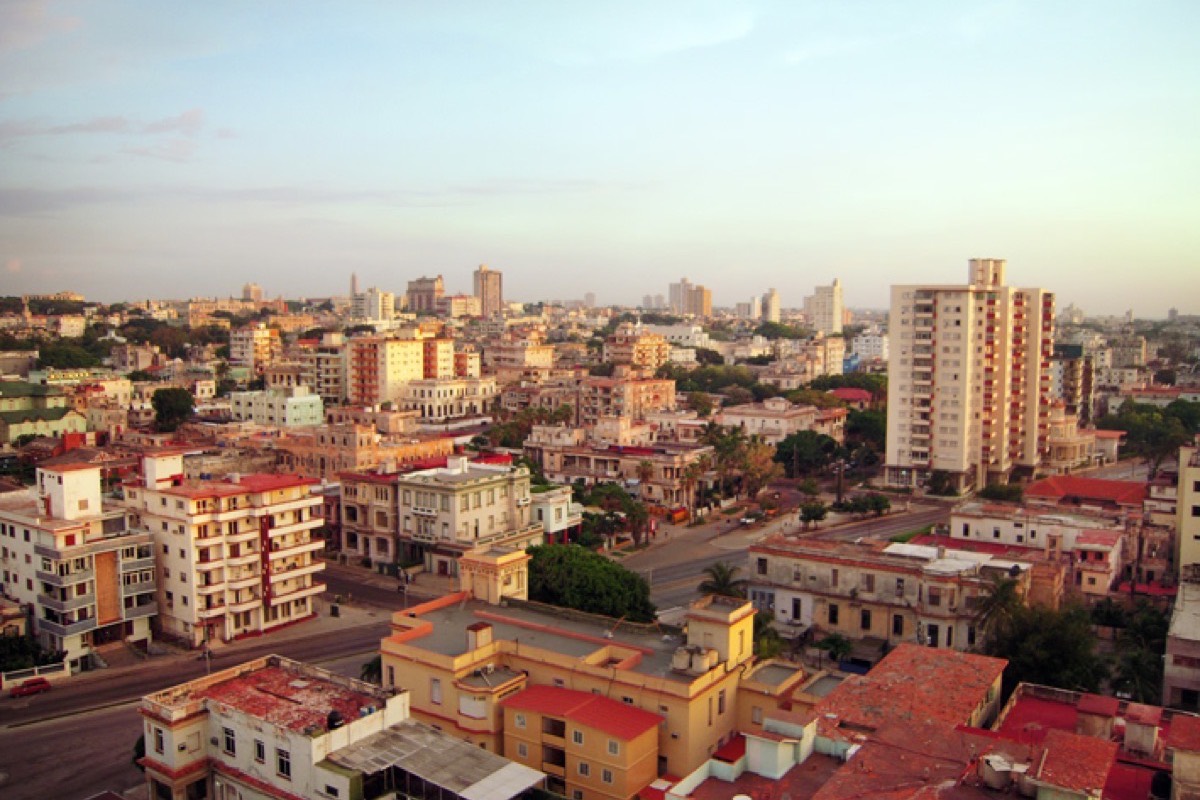
Cuban law sorts Havana’s 15 municipalities into three tax tiers. Playa, Plaza de la Revolucion and La Habana Vieja carry the highest location coefficient, 6.0. Cerro, Centro Habana and Diez de Octubre carry 5.0. The other nine carry 4.0. The rule is Resolucion 313/2024of Cuba’s Finance Ministry, in force since 15 November 2024.
In Havana the neighbourhood argument is a sport. Vedado people think Miramar is a suburb with a sea view. Miramar people think Vedado is a car park with trees. Everyone agrees Habana Vieja is the most beautiful place in the Caribbean, and almost nobody wants to carry water up to the third floor of it.
The argument was settled in 2024, in writing, by the Ministry of Finance and Prices. Not with an opinion. With a multiplier – and it binds, because it decides what both sides pay in tax when a home changes hands.
Which Havana neighbourhoods does Cuban law rank highest?
Resolucion 313/2024 puts Playa, Plaza de la Revolucion and La Habana Vieja in Annex II at coefficient 6.0, describing them in the text as a Zone of High Significance for Tourism. Cerro, Centro Habana and Diez de Octubre sit in Annex III at 5.0, together with the Guanabo strip of La Habana del Este. Everything else in the capital sits in Annex IV at 4.0.
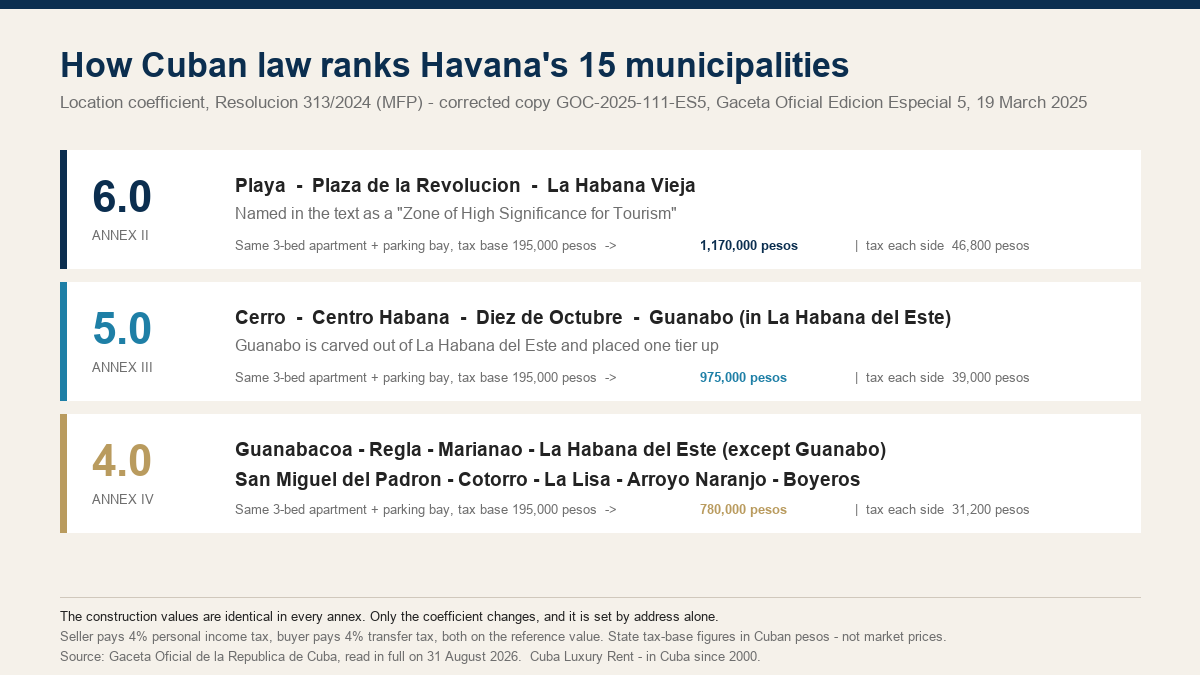
That bottom tier is nine municipalities: Guanabacoa, Regla, Marianao, La Habana del Este except Guanabo, San Miguel del Padron, Cotorro, La Lisa, Arroyo Naranjo and Boyeros. Guanabo is the carve-out worth noticing – a coastal strip lifted a full tier above the municipality it belongs to. Beach frontage, in a country that taxes tourism zones harder.
Two tiers sit outside Havana entirely. Annex I, coefficient 7.0, covers special economic development zones; the methodology gives Mariel as the example. Annex V, coefficient 1.5, covers every municipality not named in the earlier annexes, which is most of Cuba. As far as the tax office is concerned, a house in a provincial town is worth a quarter of the same house in Miramar. The text we read is the corrected copy, GOC-2025-111-ES5, published in the Gaceta Oficial’s Special Edition No. 5 on 19 March 2025.
What does the location coefficient actually change?
Everything downstream of the address. The annexes assign the same construction values across Cuba: 90,000 pesos per bedroom for a masonry house with a heavy roof, 60,000 per bedroom for an apartment, 15,000 for a garage or parking bay, 17,500 for a yard. The coefficient multiplies that total. Nothing else moves.
Take the case that comes up most often here: a three-bedroom apartment, masonry walls, concrete roof, parking bay. Base figure 195,000 pesos, identical whichever municipality it stands in.
| Tier | Havana municipalities | Coefficient | Reference value | Tax, each side |
| Annex II | Playa, Plaza de la Revolucion, La Habana Vieja | 6.0 | 1,170,000 pesos | 46,800 pesos |
| Annex III | Cerro, Centro Habana, Diez de Octubre, Guanabo | 5.0 | 975,000 pesos | 39,000 pesos |
| Annex IV | Guanabacoa, Regla, Marianao, La Habana del Este (except Guanabo), San Miguel del Padron, Cotorro, La Lisa, Arroyo Naranjo, Boyeros | 4.0 | 780,000 pesos | 31,200 pesos |
Same three-bedroom apartment with a parking bay, tax base 195,000 pesos. Seller pays 4% personal income tax, buyer pays 4% transfer tax. Source: Resolucion 313/2024, corrected copy GOC-2025-111-ES5, Gaceta Oficial Edicion Especial 5, 19 March 2025.
The same flat costs 15,600 pesos more per side in Miramar than in Santos Suarez, before anybody looks at the building. These are the state’s published tax-base figures in Cuban pesos. Not market prices, not valuations, and not Cuba Luxury Rent’s prices – every rate we quote is On Request.
Two things we found by running the annexes through a script rather than reading them. Every numeric row in the three Havana annexes multiplies out correctly against its stated coefficient. Annex I does not: its apartment block prints the 1.5 figures under a 7.0 header. And the methodology annex still sends the reader to “Annex IX”, which doesn’t exist; it means Annex IV. Both survived the correction of 19 March 2025. What a notary does with either is a question for a Cuban lawyer, not for us.
Why does Centro Habana sit a tier below Playa?
The resolution doesn’t say. What it does say is that Playa, Plaza de la Revolucion and La Habana Vieja get Annex II treatment “for being a Zone of High Significance for Tourism”. Centro Habana is not on that list, although it shares a street line with Old Havana and is the most crowded municipality in the country: 32,261.70 residents per square kilometre in 2023, on ONEI’s figures.
Playa, in the top tier, runs at 4,092.80 across 35.81 square kilometres. Centro Habana holds 110,335 people on 3.42. Nearly eight times the crowding on a tenth of the land. La Habana Vieja runs 15,429.52, Diez de Octubre 13,487.13, Plaza de la Revolucion 8,825.45 – all from ONEI’s Anuario Estadistico de La Habana 2023, table 1.3.
Centro Habana is where the state’s map and the market’s map disagree, and that gap is the most interesting part of Havana. Some of the best building stock outside Vedado, the worst maintenance in the city, the lowest tax base of the three central municipalities – and the highest chance a ceiling comes down while somebody is still living under it.
What extra permission does a sale in a tourism zone need?
A separate authorisation, before the notary sees anyone. Under Joint Resolution 1/2018 of MICONS, MINTUR and the Institute of Physical Planning, published in Gaceta Oficial Extraordinary No. 37 of 24 July 2018, an application to swap, donate or sell a home in the Zone goes to the municipal Housing directorate, which passes the file within five days to the Ministry of Tourism’s territorial delegate.
The delegate answers within 15 working days, under Article 7. Article 5 sets out what he weighs, and it’s worth reading literally: maintain the balance of the resident population in the Zone and avoid its increase; approve a swap provided it means no population increase and no new owners in the Zone; and on sales and donations, that the property doesn’t affect the Zone’s tourism development programmes. Article 6(a) adds that no new dwellings may arise in the Zone. Under Article 3.2, once authorised, the parties sign before a notary seated inside it.
Read that again. A rule of Cuban housing procedure, in force since 2018, is that the resident population of the tourism zone should not grow. It’s the clearest statement anywhere in Cuban law of what these neighbourhoods are for.
There’s a wrinkle across the two texts, and we’d rather flag it than smooth it over. The 2018 procedure names the Zone of La Habana Vieja and Centro Habana specifically, in Article 2.2 and in the title of Chapter III. The 2024 tax resolution applies the tourism-zone label to Playa, Plaza de la Revolucion and La Habana Vieja. Two published texts, two lists. Which boundary applies to a particular address is a question for a Cuban lawyer, and we’re not going to guess it for you.
Who decides in La Habana Vieja and Centro Habana?
The Office of the Historian of the City of Havana. Article 2.2 of Joint Resolution 1/2018 routes applications from the La Habana Vieja and Centro Habana zone to specific legislation, and the resolution’s own recitals name it: Agreement 8208 of the Executive Committee of the Council of Ministers, 19 August 2017, which regulates the Historian’s powers to approve swaps, donations and sales of homes in its territory under Article 110 of Ley 65.
The same office replaces MINTUR further down the process. Article 4.2 sends construction applications – rehabilitation, merging, splitting, extending, remodelling – to the Historian’s Office rather than the tourism delegate when the building stands in Habana Vieja or Centro Habana. Article 8 hands it any rooms that fall vacant to the State inside the Zone. Article 9: in the Zone, commercial premises are not handed over for residential use.
That’s the practical difference between buying in Vedado and buying in Old Havana. In Vedado you deal with the housing office and a notary. In Old Havana a restoration authority sits inside your file, with its own list of what the neighbourhood is for. UNESCO inscribed Old Havana and its Fortification System in 1982, a property of 238.7 hectares with a 412.4-hectare buffer; ONEI puts the whole municipality at 4.37 square kilometres. The World Heritage property takes up rather more than half of it.
Where does Havana’s investment money actually go?
Into two municipalities. ONEI’s Havana yearbook for 2023 puts the province’s total investment volume at 30,246.7 million pesos. Playa took 12,953.3 million and Plaza de la Revolucion 11,096.7 million – 24,050.0 million between them, 79.5% of the province. Diez de Octubre, where 165,622 people live, got 37.1 million.
That last figure is 0.12% of the total. Centro Habana took 969.5 million, La Habana Vieja 1,375.1 million, every other municipality less. This is investment across all sectors, not housing – table 10.3, page 98 of the Anuario Estadistico de La Habana 2023. The municipality figures add up to the provincial total to the decimal point; we checked, because published Cuban tables don’t always.
Whatever else the coefficient table is, it isn’t arbitrary. The two municipalities the state taxes hardest are the two it spends in.
How much of Old Havana is still habitable?
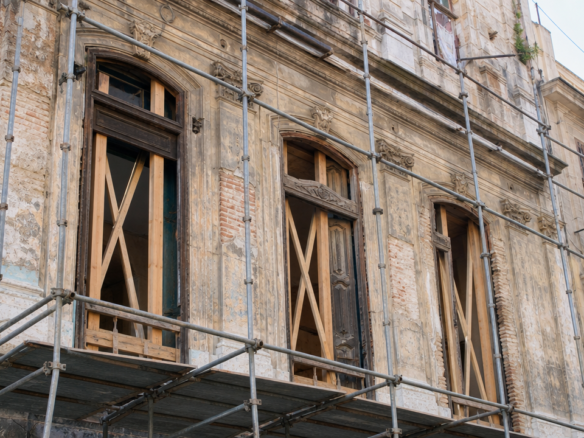
Less than the postcard suggests. Havana’s General Urban Plan to 2030, as reported by 14ymedio on 5 October 2023, found that more than 40% of the 20,000-plus dwellings identified in Old Havana failed minimum habitability conditions, and counted 6,899 tenement buildings across the city – cuarterias and ciudadelas – housing 60,170 family units.
Those are 2023 figures from a plan approved in 2021, and nothing newer at municipal level checked out – the last published picture, not today’s. Nationally: ONEI figures reported by IPS on 14 August 2026 put completions at 5,493 homes in all of 2025, against a deficit above 800,000 units. A coefficient of 6.0 attaches to an address. It doesn’t attach to a roof.
Which housing law applies in Havana right now?
Ley 65 of 23 December 1988, still – the law both tourism-zone articles live in. Cuba’s National Assembly approved a new housing law on 30 July 2026, and it takes effect 90 days after publication in the Gaceta Oficial. IPS reported on 14 August 2026 that it had not been published, and the Gaceta’s own housing index, checked again on 31 August 2026, lists no 2026 housing law. When it does take effect, this is the part of the map most likely to be redrawn, and we’ll rewrite the article then rather than guess now.
What actually moves value inside a Havana neighbourhood?
Water, power, the stair, and who owns the roof above you. The coefficient is a judgement about the street. It says nothing about whether the building has a cistern and a pump that runs, whether the block sits on a circuit that gets cut early in a shortage, or whether the flat above yours is somebody else’s floor with somebody else’s plans for it.
Cuba Luxury Rent has worked in Cuba since 2000 and keeps an office in Havana. In that time the questions people ask us about neighbourhoods have barely changed: which street is quiet, how far to the Malecon, is it safe at night. The questions that decide whether a Havana house works have changed completely. Where’s the cistern and how many cubic metres. Is there a tank on the roof, and does anyone maintain the pump. What happens on this block when the grid drops. Who holds title to the roof slab above the top-floor flat – in a Havana building that’s very often somebody else.
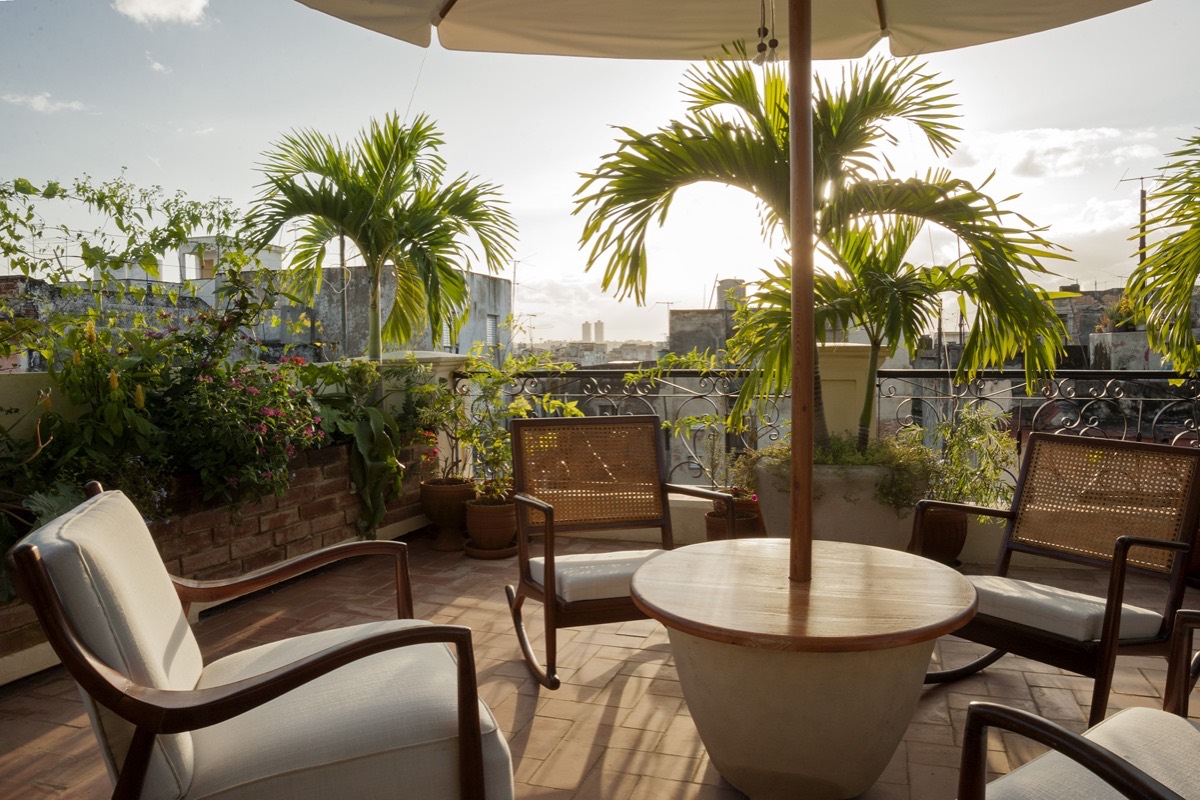
Two apartments in the same building carry the same coefficient and the same tax. They aren’t the same asset. One has the cistern in the courtyard and a neighbour who can fix the pump. The other has a bucket.
Cuba Luxury Rent reads these texts because clients ask what a Havana address is worth, and the honest answer starts with what the state has written down about it. Weighing a purchase, a sale or a long stay in one of these municipalities? Our concierge desk will go through what applies to that address, and say plainly where the answer needs a Cuban lawyer rather than us.
FAQ
Which Havana municipality has the highest property tax coefficient?
Three share it. Playa, Plaza de la Revolucion and La Habana Vieja all sit in Annex II of Cuba’s Resolucion 313/2024 at coefficient 6.0, named in the text as a Zone of High Significance for Tourism. No Havana municipality carries the 7.0 coefficient, which is reserved for special economic development zones such as Mariel.
Does the coefficient set the price of a Havana home?
No. It sets the minimum reference value used to calculate two taxes: 4% personal income tax on the seller and 4% transfer tax on the buyer. Cuban law lets the parties agree their own transaction value; the reference value is the floor the tax is calculated from if the declared figure falls below it.
Do you need special permission to sell a home in Old Havana?
Under Joint Resolution 1/2018, a sale, donation or swap in a Zone of High Significance for Tourism needs an authorisation before the notary acts. Applications from the La Habana Vieja and Centro Habana zone are routed to the Office of the Historian of the City of Havana. Confirm what applies to a specific address with a Cuban lawyer.
Which is Havana’s most crowded municipality?
Centro Habana, at 32,261.70 residents per square kilometre in 2023 – 110,335 people on 3.42 square kilometres, according to ONEI’s Anuario Estadistico de La Habana 2023. La Habana Vieja follows at 15,429.52 and Diez de Octubre at 13,487.13. Playa, in the top tax tier, runs at 4,092.80.
Has Cuba’s new housing law changed the neighbourhood rules yet?
Not as of 31 August 2026. The National Assembly approved a new housing law on 30 July 2026, and it takes effect 90 days after publication in the Gaceta Oficial. It had not been published as of 14 August 2026 on IPS’s reporting, and the Gaceta’s housing index still lists no 2026 housing law. Ley 65 of 1988 remains the law in force.


Join The Discussion